The Crawl Page: Turn Searches Into Opportunities
What is Search Engine Optimization
Search Engine Optimization is the main tool for increasing your website’s visibility in the search engine result pages. It is a way of promoting your online business in front of the target customers searching for your products/services on the web.
At The Crawl Page, we offer cost-effective and relevant SEO services to help improve your website’s ranking and visibility. Through our expert SEO company, you will get the right techniques and tools to improve your site’s optimization, attract more organic traffic, and build a strong digital presence. From keyword research and on-page SEO to technical audits and content optimization, we take care of every element involved in the optimization process.
Our end goal is to boost the presence of your brand on the internet and help it reach the right customers.
How Does Search Engine Optimization Work?
Search Engine Optimization (SEO) entails optimizing the website in order to make it searchable. Therefore, SEO involves developing the site in a way that it can be found by search engines such as Google. SEO is implemented when search engines comprehend the data on a website and identify it as informative.
The search engine operates in three primary stages which include crawling, indexing, and ranking. During the first stage, search engines crawl web pages by using robots. The second step is indexing where the information gathered during crawling is organized. The last step is ranking where search engines sort the results according to their relevance and quality.
Optimizing a website requires having relevant keywords, appropriate informative content, fast loading speed, mobile-friendly, technical optimization, and credible backlinks among other aspects. Therefore, SEO, when implemented correctly, enhances the visibility of websites, improves the traffic of the targeted sites, boosts the target audience, and ultimately enhances sustainability.
Different Faces of SEO That Drive Digital Success
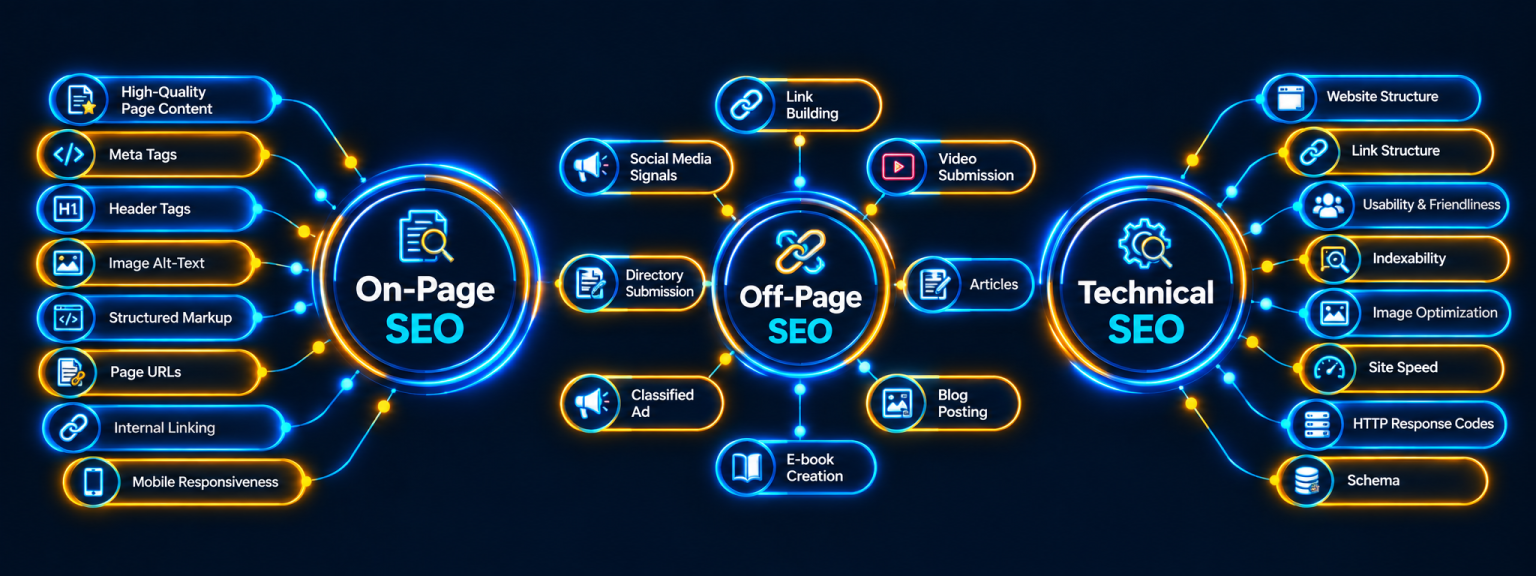
On Page SEO
Off Page SEO
Technical SEO
What Is On - Page SEO?
On-Page SEO refers to the optimization of web page content to get higher search results on search engines and offer quality information to each visitor. On-page SEO entails optimizing the content, keywords, headlines, images, links, Uniform Resource Identifier (URI), and other elements that exist within the webpages. This way, a webpage is well optimized using keywords and offers relevant content to searchers. At the same time, it also helps to meet the demands of the search engine by giving a better understanding of its contents.
The Crawl Page company specializes in developing an optimal On-Page SEO strategy that meets the needs of search engines and fits the demands of customers. The experts at this company offer the best optimization of each element on a website to make customers’ webpages relevant, informative, organized, and able to attract customers.
Why Is On-Page SEO Important for Websites?
On-Page SEO is important because it ensures that the website is well optimized to compete and be visible in the search results. By optimizing the website’s content, keywords, headings, images, and other elements, the search engines can easily read and understand the information architecture of the site. At the same time, the site is more likely to be user-friendly and helpful to the customers.
Therefore, it is critical to optimize the content and elements on the web page to benefit from increased appeal to the target audience and visitors. As a result, there will be more organic traffic flowing to the website, which will help the company earn more customers and grow steadily organically. Thus, On-Page SEO is essential to make the site readable and optimized for Google and the customers.
What Is Off - Page SEO?
Off-Page SEO – this is the work done outside the website in order to increase the website’s visibility, credibility, and authority in the search engine results. Unlike On-Page SEO, which works directly with the website’s contents, Off-Page SEO affects the site from the outside.
It includes various strategies and techniques like link building, social media promotion, guest posting, business listings and directories, content promo, and mentions. The primary objective of implementing Off-Page SEO is to create a strong presence for the website across different platforms and networks.
This, therefore, helps search engines to recognize the website as a credible source since it appears on many sites and web pages, some of which may have high authority. A solid Off-Page SEO strategy should not be aimed at acquiring links but should focus on finding influential, relevant, and credible sources to build an entity’s authority and help it reach a far audience.
What Are the Main Techniques Used in Off-Page SEO?
The primary techniques of Off-Page SEO are aimed at improving the authority, credibility, and reputation of a website in the online space. In addition to the main methods, such as link building, there are various ways to perform off-page optimization. Thus, businesses use social media, guest posting, business listings, content promotion, reviews, mentions, and digital PR. Companies can also invest in engaging relevant bloggers, publishers, and influencers in their niche to build awareness and drive more traffic to their site. In this regard, the importance of Off-Page SEO should not be understated, as it allows organizations to get higher search engine results and improve their organic performance over time. Notably, the volume of backlinks is not as critical as their relevance and quality, so businesses should focus on creating high-quality and relevant content to build relationships with other web resources. As a result, they can get an increased number of brand mentions, drive more referral traffic, improve the company’s image, and raise the authority of their website.
What Is Technical SEO?
Technical SEO refers to the optimization of the technical aspects of a website to make it easier for search engines to crawl, comprehend, and index. Unlike On-Page SEO, which deals with the content of a web page, Technical SEO deals with the technical elements of a website. The key elements of Technical SEO are website speed, mobile-friendliness, data structure, indexing, XML sitemap, robots txt, HTTPS encryption, broken links, redirects, URL structure, and structured data.
An effectively optimized technical SEO can contribute to a better overall user experience and help search engines understand and index the website’s pages without any problems. In other words, Technical SEO optimizes a website to enhance its capacity and potential, making it more appealing to crawlers and improving the organic reach of its content. Moreover, Technical SEO helps detect and fix issues that might hinder the crawling, indexing, and auto-discovery of the web pages. By definition, Technical SEO helps a website appear better in search results for years to come.
Key Elements of Technical SEO
Technical SEO is the technical aspect of a website that helps search engines crawl, index, and understand the pages on a site and facilitates the viewer’s experience on the website. Website speed/performance, mobile-friendliness, crawl ability/indexability, XML sitemaps, robots.txt, website structure, secure website connection (HTTPS), broken links and redirects, schema structured data, and canonical tags are some of the factors that fall under technical SEO. Technical SEO-friendly websites exist to ensure that search engines can reach and index a site’s significant pages without any difficulties. Having a strong technical SEO foundation is critical to a website’s overall success and performance and should be the cornerstone of any SEO strategy.
Techniques of SEO
Black Hat SEO
White Hat SEO
Grey Hat SEO
Black Hat SEO

Black Hat SEO is a concept of search engine optimization that implies the use of spurious tactics that are not fair or are against the rules of search engines. Usually, such types of promotion are resorted to in order to achieve immediate results, but they bring serious consequences later. Such methods are spamming, cloaking, indexing, buying links, stuffing, and creating doorway and mirror pages. Although they may seem effective, they must be prohibited since they bring serious consequences such as reduction in the rating or deletion from search engines. All this negatively affects the visibility of the site and its popularity on the web. In this regard, companies should carefully use black SEO techniques and abandon them in favor of clean and quality optimization methods.
White Hat SEO
White Hat SEO refers to the ethical optimization techniques that use search engine friendly strategies and improve the online presence of a website. Unlike the black-hat SEO strategies, white hat approaches comply with the guidelines of search engines. Thus, such methods are focused on the creation of high-quality content, increasing the number of website visitors, and encouraging community engagement. White hat SEO sppliers usually apply a combination of different optimization methods. The most common among them are keyword research, website optimization, responsive design, accelerating the site, and link building. Overall, white-hat SEO practices are aimed at maintaining the high quality of a website and sustaining its stable position in search results.

Grey Hat SEO

Grey Hat SEO is an SEO technique that is not explicitly prohibited but is also not fully honest. It is a practice that falls between White Hat and Black Hat SEO agencies. Examples of such practices include aggressive link building outreach, purchasing expired domains for SEO purposes, keyword stuffing, or creating satellite websites to boost the primary website’s authority. While such a strategy may yield faster results, it has a significantly increased risk of penalty if the search engines identify the manipulative practices.